Portable Scanner vs Flatbed Scanner: And Why It Matters
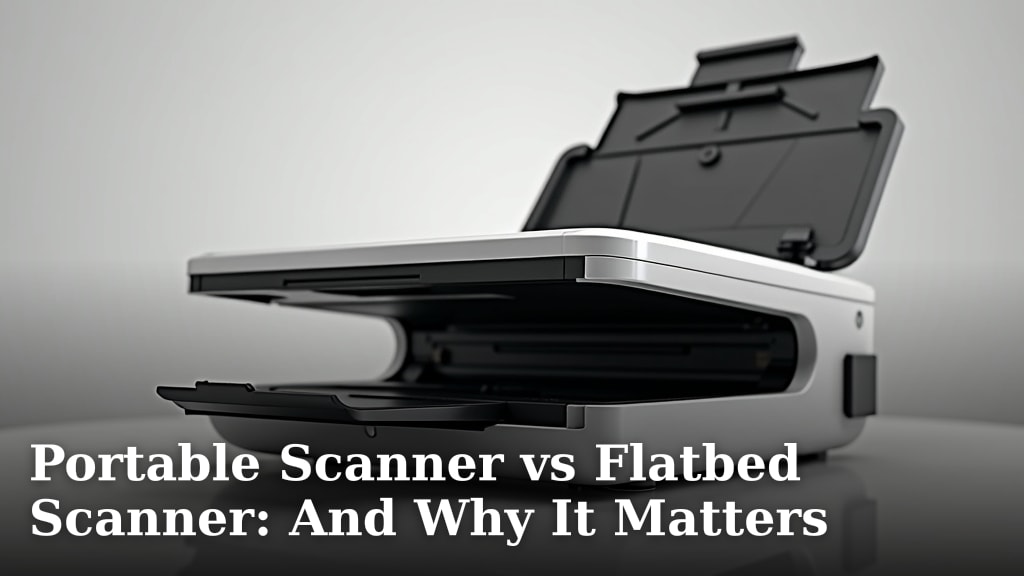
When choosing between a portable scanner and a flatbed scanner, the main difference comes down to portability vs. quality. Portable scanners are great for on-the-go document capture, while flatbeds offer superior image fidelity for photos and delicate items. Both have their place, depending on your needs.
Think about what you’ll be scanning most often. If it’s receipts, business cards, or single pages while traveling, a portable model is likely your best bet. But if you need to scan old photos, fragile artwork, or even books without damaging them, a flatbed scanner will provide the clearer, more detailed results you’re looking for.
- Portable scanners are compact and ideal for travel.
- Flatbed scanners offer higher quality for photos and delicate items.
- Consider your primary scanning tasks.
- Portability is key for on-the-go needs.
- Quality is king for photos and art.
Let’s break down which type of scanner might be the perfect fit for your home or office setup.
So, you’ve got some stuff to scan. Maybe it’s those old family photos gathering dust, important documents you need to digitize, or even that business card from a networking event. The big question is, what kind of scanner do you actually need? Two main types usually pop up: portable scanners and flatbed scanners. They both scan, sure, but they do it in very different ways, and understanding those differences will save you time, money, and a whole lot of frustration. Let’s dive into how to pick the right tool for your scanning job.
Portable vs. Flatbed Scanners: What’s the Big Deal?
Think of it like this: a portable scanner is your trusty sidekick for quick scans on the go. A flatbed scanner is more like your dedicated home studio for detailed, high-quality work. Each has its strengths and weaknesses, and knowing them helps you avoid buying the wrong gadget.
What Exactly is a Portable Scanner?
Portable scanners are designed for life outside a dedicated office space. They’re generally small and lightweight, making them super easy to toss into a bag. You’ll find them in a few common forms. Some are handheld, meaning you manually swipe them across the document. Others are small sheet-fed models that pull the paper through automatically. They often run on batteries, adding to their grab-and-go appeal. For ultimate portability, consider a scanning app on your smartphone.
The Freedom of Portability
The biggest perk here is obvious: portability. If you travel for work, attend a lot of conferences, or just like to scan documents from different locations, this is your champ. Imagine scanning receipts right after a business lunch or digitizing a contract at a coffee shop. It’s all about convenience and capturing information exactly when and where you need it. You’re not tied to a desk.
Where Portable Scanners Shine
These devices are perfect for scanning single pages. Think business cards, receipts, invoices, or even a page from a book (though you have to be careful with books). Many are designed to handle standard letter or legal-sized documents quickly. They’re often used by sales professionals, real estate agents, or anyone who needs to capture documents outside a traditional office. We found that many users appreciate their speed for simple tasks.
The Downsides of Going Mobile
While handy, portable scanners often come with trade-offs. The scan quality can be lower compared to a flatbed. Colors might not be as vibrant, and fine details can sometimes be lost. Also, if you’re using a handheld scanner, getting a perfectly straight scan can be tricky. It requires a steady hand. Sheet-fed portable scanners are better for straight scans, but they might struggle with thicker or irregularly shaped items.
What Exactly is a Flatbed Scanner?
A flatbed scanner is the more traditional type of scanner you might remember from school or older offices. It has a large, flat glass surface. You place your document face down on the glass, close the lid, and the scanner does its magic. This design is crucial for how it captures images.
The Power of Precision and Detail
The flatbed design offers superior image quality. Because the document lies perfectly flat and is in direct contact with the scanner’s sensor, it captures incredibly crisp and detailed images. This is especially important for photographs, artwork, or any item where preserving fine lines, subtle colors, and textures is critical. Many professionals, like graphic designers or archivists, rely on flatbeds for this precision.
Where Flatbed Scanners Excel
Flatbeds are fantastic for scanning delicate or irregular items. Think about old, fragile photographs that could easily be damaged by being fed through a machine. Or what about that delicate piece of artwork you want to digitize without touching it too much? Even books can be scanned carefully on a flatbed without bending their spines excessively. They can also handle a wider range of document sizes, often up to A4 or even larger, depending on the model.
The Trade-Off: Size and Speed
The main drawback of flatbed scanners is their size and lack of portability. They tend to be larger and heavier, designed to sit on a desk. They also usually take longer to scan a single page compared to a speedy portable scanner. You can’t just pick them up and take them to a client meeting. They are best suited for a stationary setup.
Key Differences Summarized for Your Decision
To help you see it clearly, let’s break down the core differences in a way that’s easy to digest. This is where we start to see which one might be calling your name.
Speed and Convenience
If you need to scan a lot of documents quickly, especially single pages, a portable scanner often wins. Many can scan a page in seconds. Flatbeds are generally slower per page because they have to go through a more detailed process. However, for multi-page documents, some flatbeds (especially those with Automatic Document Feeders, or ADFs) can be very fast, but that’s a different category of flatbed.
Scan Quality and Accuracy
For anything that requires high detail, accurate color reproduction, or scanning delicate items, the flatbed scanner is the clear winner. Its design minimizes distortion and captures fine nuances. Portable scanners are good for text-based documents where perfect color accuracy isn’t essential, but they might struggle with subtle shading in photos.
Item Types You Can Scan
This is a big one. Portable scanners are best for standard-sized paper documents. They can struggle with thick cardstock, odd shapes, or very fragile materials. Flatbeds, with their open glass surface, are much more forgiving. You can lay down photos, small objects, fabric swatches, or even fragile historical documents with confidence. We found that flatbeds offer the most versatility in terms of what you can place on them.
Space and Power Requirements
Portable scanners are compact and often battery-powered, making them ideal for small spaces or no access to outlets. Flatbeds need a dedicated spot on your desk and require a constant power source. If desk space is at a premium, or you need to scan in a location without power, a portable unit is your friend.
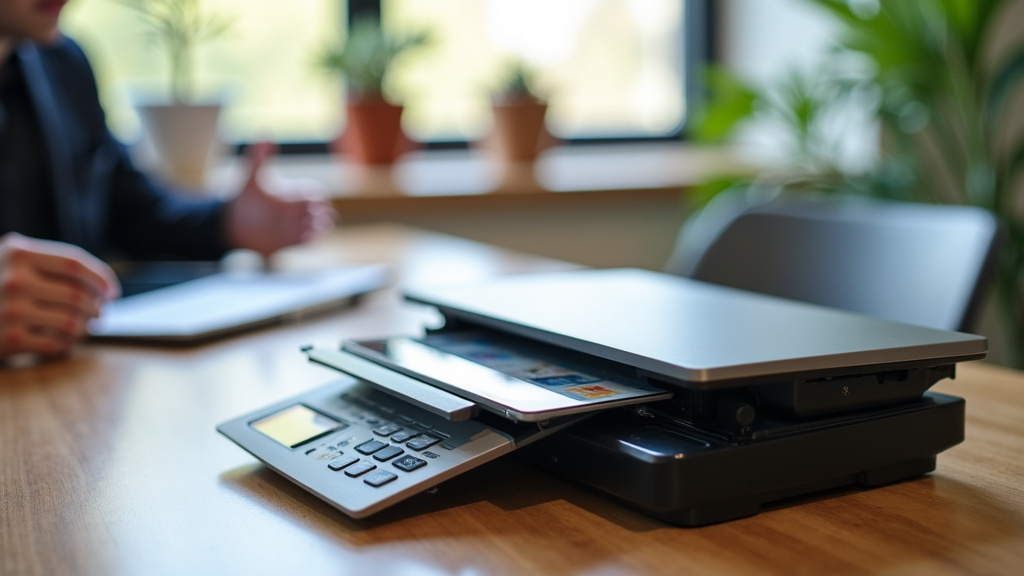
Making the Right Choice for Your Needs
Deciding between the two really boils down to your primary scanning tasks. Ask yourself a few key questions.
What Will You Be Scanning Most Often?
Are you digitizing stacks of paper for your business? Or are you trying to preserve your grandparents’ old photo albums? The answer to this guides your decision. For business documents, a portable scanner might be sufficient. For preserving memories or high-quality archiving, a flatbed is usually the better investment.
Where Will You Be Doing Most of Your Scanning?
If your scanning happens at home or in a dedicated office, a flatbed scanner can be a great permanent fixture. If you’re frequently on the road, at client sites, or moving between different workspaces, a portable scanner offers the freedom you need. We found that users who travel often highly rate the convenience of portable models.
What Level of Quality Do You Need?
For simple text documents, a basic scan is often fine. But if you’re scanning photos for framing, artwork for a portfolio, or documents where even small details matter, you’ll want the superior resolution and color accuracy that a flatbed scanner provides. Many experts agree that for archival purposes, the detail captured by a flatbed is irreplaceable (National Archives and Records Administration).
Consider this simple checklist to guide your thinking:
- Do you need to scan while traveling or away from your desk?
- Are you mostly scanning single pages of text or receipts?
- Is maximum scan quality for photos or art your top priority?
- Do you need to scan delicate, thick, or unusually shaped items?
- How much space do you have for a scanner?
- Is battery power or portability a must-have feature?
By honestly answering these questions, you can move past the confusion and select the scanner that will best serve your needs, making your scanning tasks easier and more effective.
Conclusion
Choosing between a portable and a flatbed scanner really comes down to your specific needs. If you’re always on the move and need to capture documents quickly, a portable scanner offers unmatched convenience. For those who prioritize top-tier image quality for photos, artwork, or delicate items, a flatbed scanner remains the best choice. We found that thinking about what you scan most often and where you scan is key. Take a moment to review your typical scanning tasks and your workspace. Then, you can confidently select the scanner that will serve you best.
Frequently Asked Questions
Can a portable scanner handle multiple pages?
Some portable scanners have automatic document feeders (ADFs) that can handle multiple pages. However, many portable models are designed for single-page scanning. For frequent multi-page scanning, you might want to check the specific model’s capabilities or consider a compact flatbed with an ADF.
Will a portable scanner damage my documents?
Generally, no. Most portable scanners are designed to gently feed documents. However, with very old, fragile, or brittle paper, any scanning process carries a slight risk. If you’re scanning highly delicate historical documents, a flatbed scanner allows you to place them gently on the glass without risk of them being pulled or creased.
Which scanner type is better for scanning books?
A flatbed scanner is much better for scanning books. You can lay the book open on the glass and scan pages without bending the spine severely, which is important for preserving the book. Portable scanners are not suitable for scanning books.
Do portable scanners require a computer to work?
Many portable scanners can scan directly to an SD card or USB drive without needing a computer. This makes them truly independent and portable. Others may require a connection to a computer or mobile device for scanning and saving files.
Is a flatbed scanner worth it if I only scan photos occasionally?
If you only scan photos occasionally but prioritize high-quality results, a flatbed scanner is still likely your best option. They capture the detail and color fidelity that portable scanners often can’t match, ensuring your precious memories are preserved accurately.